Monday, December 8, 2014

Tropical Deforestation in Australia

     People have been committing the process of tropical deforestation for thousands of years all over the globe. According to earthobservatoy.gov, (Source 1) “although tropical forests are largely confined to developing countries, they aren't just meeting local or national needs; economic globalization means that the needs and wants of the global population are bearing down on them as well.” While there is no one direct cause for deforestation there are many contributing factors. One of the primary reason for people obliterating the forest is for the land. Once the land is cleared it could be used in many different ways. The land could be used for: croplands, pasture, raising livestock, or for urbanization. The second cause for deforestation is logging (Source 1). The trees that are being cut down are being used for a vast majority of objects. Including paper, pencils, lumber, cellophane, asphalt, paint, chewing gum, detergents and turpentine. The third major factor contributing to deforestation is according to earthobervatory.gov (Source 1)  is poverty. “Although poverty is often cited as the underlying cause of tropical deforestation, analyses of multiple scientific studies indicate that that explanation is an oversimplification. Poverty does drive people to migrate to forest frontiers, where they engage in slash and burn forest clearing for subsistence”.  


                                     Figure 1: A method of tropical deforestation
                        
                                                         
                                     Figure 2: Another method of tropical deforestation

                                   
                             Figure 3: Poverty pushes many people to live in the woods


      Tropical deforestation is a problem in Australia, even though most of Australia consists mostly of deserts. According to Corey J. A. Bradshaw’s Oxford Journal(Source 2) , even with Australia’s “relatively small human population (22.5 million) it has been responsible for extensive deforestation and forest degradation since European settlement in the late 18th century.”. Even though a small percent of Australia has tropical forest, a good portion of the forest is being stripped away. According to World Wildlife Fund (WWF) (Source 3), “It is estimated that around 7% of the agricultural area of western Australia is suffering from this problem following deforestation” . In a recent study done by WWF, Australia’s tropic soils will probably never recover from suffering tropical deforestation. 

By: Gabrielle Ramsay, Christie Johnson,  
Work Cited:
earthobservatory.nasa.gov (Source 1)
cafnec.org.au (Firgure 2)
www.gettyimages.com (Figure 3)
http://jpe.oxfordjournals.org/content/5/1/109.full (Source 2)
http://wwf.panda.org/who_we_are/wwf_offices/australia/environmental_problems_in_australia/  (Source 3)

Food and Its Impact on Australia

Map_Land_Use.jpg (768×768)
Figure 1: Feeding the Future

       Intensive and extensive farming, also known as intensive and extensive agriculture, are prevalent around the world and are very important techniques on how to treat land to produce food. Furthermore, there are two more techniques on how the wheat like corn etc. or animals are going to be treated.The names of those techniques are industrial and traditional food production. In the following paragraph the difference is going to be explained. On the one hand there is intensive farming is characterized as follows; The land which has to be farmed is cultivated intensely for years or is going to be prepared for years. New agriculture methods and the knowledge of the humans is valuable for that technique to improve the farm. The farm is carried in densely populated areas like India, Japan or U.K and they are small as well. Finally the yield per hectare is bigger than per person. On the other hand there is extensive farming. This technique is dominated by machines and the will to gain more and more. It is used in areas where the population is not high, therefore the farms are very large. Here we have a bigger yield per person than per hectare. Examples for that technique are USA, Canada, and Australia(Source 1). 
       If a country does industrial food production they use chemistry to make corn for example growing bigger and faster or they treat corn with chemistry to keep little animals away which could destroy the yield. Animals are going to be hold in cages and in a small area. That means the animals can not move like they are used to and therefore the quality of the meat is going to be bad. Traditional food production is the opposite of industrial. Animals and wheat are treated in a different way. Animals have space and can follow their normal behaviors. Corn for instance is treated without any chemistry so the quality of it is going to be better. Finally, it is mention-able that extensive farming in Australia is ahead of intensive farming which is caused by the huge area of land in Australia and the less population pressure. Furthermore, Australia is well known for its traditional food production. For instance the sheep farms in the outback, where over 82 million sheep were held. They have enough space to live their life as usual and with that a good quality is guaranteed. In wheat Australia is known for the organic farming in which no chemistry is going to be used (Source 2). 


Culture in Australia

         cul31.jpg (640×480)
Figure 1: Culture in Australia (The Dreamers)
   
       For as long as humans have been around culture has followed them. Whenever a group of people invents something new, they think of a new way of doing something or create a piece of art work that group of people are creating culture. Culture is defined as the beliefs, customs, art, etc., of a group of people. Culture can be separated into four more specific sections: Gender, language, religion and how it affects globalization. Every society has gender roles, and Australia is no exception. A recent study found that 90% of women in Australia do the child care work and 70% do all the house work. On the other side, the fathers are only responsible for 14% of the household work leaving the children with the rest. Matching what the text book says about gender roles, Australia follows the traditional path of what men and women's roles in their culture can be (Source 1). The diverse languages found in Australia make up a large part of the Australian culture. Much of the aboriginal languages spoken in early Australia still remain  today. Australia has many different languages, but English is the primary language spoken. This is because England colonized Australia the English culture has a heavy impact on Australia. Most Australians have accents similar to those found in England, but with other languages and accents influencing the people of Australia they created their own accent that they call Australian-English (Source 2). Similarly to what happened with their accents and language, since the English colonies who colonized Australia were predominantly Roman Catholic a vast majority of the population of Australia is Roman Catholic today (Source 3). The aboriginal peoples, like their language, continue to have their own culture and their own religion that they call "The Dreaming". Today, there are aspects of Australian culture intertwined into American lives. You can find foods like Vegemite and Tin Tam in a grocery store and kids play with traditional hunting tools called boomerangs. Because of globalization, Australian culture is influencing places all over the world. 

Work Cited: 
(Source1)http://www.aifs.gov.au/institute/pubs/fm1/fm37gr.html
(Source 2) http://en.wikipedia.org/wiki/Languages_of_Australia
(Source 3) (Figure 1) http://en.wikipedia.org/wiki/Religion_in_Australia

Global Food Production in Australia


                                       Figure 1: Food production in Australia

        Four problems with global food production are water, increasing population, increased cost, and less arable land.  Unbeknownst to many people who live in first world countries, water is a very scarce resource.  In many countries around the world, water scarcity, water sanitation, and water access are massive issues (Source 3).  Some people have to walk miles to find water and even then the water is probably not clean and they have no way to sanitize it.  Water stress is projected to hit the western United States and a large portion of northern Africa and the Middle East in 2025 (Source 3).  This scarcity of water causes food production issues because plants need water to grow and with little water available, growing food is extremely difficult.  Also, the world population is projected to rise from 7 billion to 9 billion by 2050.  With that many new people and not anymore water or arable land, food scarcity will become a big problem (Source 2).  In 2008, food costs spiked.  That was only a sample of what is to come when the population spikes (Source 2).  Spikes in gas prices and fertilizer prices also makes global food production difficult.  The Green Revolution was an attempt to drastically increase food production and it did for a time, but now the food production is leveling off while the population is still increasing.  While most of the world is struggling in food production, Australia is supporting up to 400 million people with their food production (Source 1).  Australia may have bad soils and bad climates for agriculture but with new technologies they are increasing their production and make over $30 billion annually from food exports (Source 1).

By Tori Sanders
Work Cited:
(Figure 1) Food Production in Australia https://www.google.com/search?q=farming+in+Australia
(Source 1) The Conversation http://theconversation.com/australia-cant-feed-the-world-but-it-can-help-11269
(Source 2) Global Food Security http://www.foodsecurity.ac.uk/issue/global.html
(Source 3) Geography and Diversity: Geography of a Changing World Textbook 4th Edition

Globalization and trade agreements impact on the environment

  Globalization and trade agreements both have a great negative impact in the environment. Due to globalization, there has been an increase in the consuming of products. When the demand for these goods goes up, the stress on the environment goes up as well. An example would be when a crop goes high up in demand. The farmers will be putting strain on their soils due to trying to get the crop to the consumers as quickly as possible. According to Buzzle.com (Source 1), “Due to globalization and industrialization, various chemicals have been thrown into the soil which have resulted into the growth of many noxious weeds and plants. This toxic waste has caused a lot of damage to plants by interfering in their genetic makeup”.  These chemicals become harmful to the consumer, due to the fact that we may consume some of these plants. Globalization also plays a big role in polluting the environment. This is caused by harmful gases and the burning of fossil fuels that are released when transporting products. When harmful gases are released into our air and slowly destroy the ozone layer, they cause what is known as the greenhouse effect. Another factor that makes globalization bad for the environment is when industrial waste is dumped into seas. After they dump this toxic waste into the sea, it can kill many of the saltwater wildlife. (Source 1) Some species that have been affected are sea otters, manatees, and sea turtles.
                      
                            Figure 1: Sea otters are affected by globalization

      Trade agreement also has a big impact on the environment. When transporting goods from one country to another, not only does this put pollutants in the ocean but also brings invasive species. An example of an invasive species is the zebra mussel.  According to noaa.gov (Source 2), these zebra mussels attach themselves to Western European trade ships and have ended up in American rivers. Not only are they slowly killing the native freshwater mussel species, but also damaging the rivers that they inhabit as well. Trade agreement, like globalization, also puts harmful gases and pollutants in the air. (Source 3)
                    Zebra Mussel (Dreissena polymorpha).  
                  Figure 2: Zebra mussels have a negative impact in U.S. rivers

      Australia, like many other countries, has experienced globalization. Australia has had a few negative environmental impacts, like the decaying of the Great Barrier Reef. Australia has seen the negative effects of trade and is doing a very good job of stopping the negative things from occurring again. According to dfat.gov.au, "10.5 percent of Australia's natural environment is protected by national legislation." (Source 4)

By: Gabrielle Ramsay and Christie Johnson, and Tori Sanders
Work Cited:
Figure 1- http://scienceillustrated.com.au/blog/nature/urchin-loving-otters-fight-global-warming/ 
Source 3- http://www.wto.org/english/tratop_e/envir_e/climate_impact_e.htm 
Source 4- http://www.dfat.gov.au/facts/env_glance.html

The Kyoto Protocol and Australia


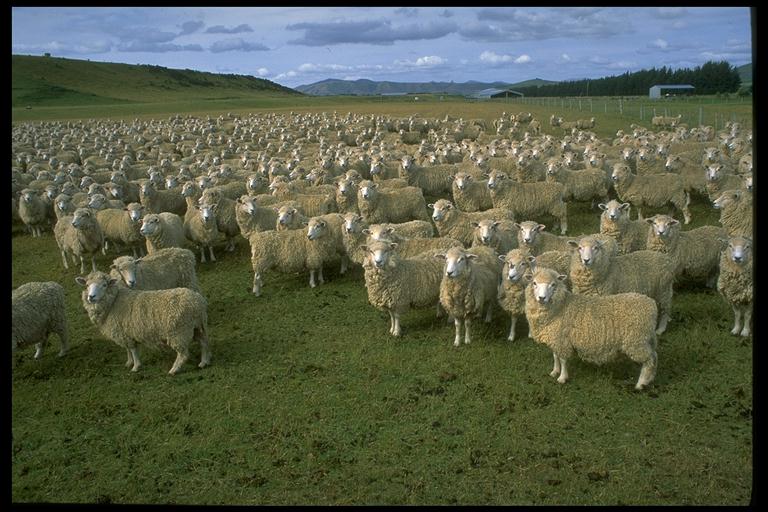
 Figure 1: Sheep herding in Australia
       
        The Kyoto Protocol was the second attempt at getting majoring industrialized countries to lower their CO2 emissions.  The first attempt was in 1992 at the Earth Summit in Rio de Janeiro.  167 countries signed an agreement to voluntarily lower their greenhouse gas (GHG) emissions.  None of the countries reached their goals so in 1997 there was a meeting in Kyoto, Japan (Source 1).  At Kyoto, 30 western industrialized countries agreed to lower their emissions to 1990 levels by 2012.  The Kyoto Protocol had the influence of international law unlike the Rio agreement.  Unfortunately, the United States refused to agree to the Kyoto Protocol because it could potentially harm their economy (Source 1).  As the years progressed in became increasingly clear that the countries were not going to be able to meet their CO2 emissions rates.  Although industrialized, the Kyoto Protocol did not include Brazil, China, India and other developing countries so as to not hinder them in their developing (source 1).  However, China surpassed the US in GHG emissions in 2008, while India and Brazil were rapidly growing.  With the Kyoto Protocol due to expire in 2012, these new agreements were made: extended to 2015, included all countries, and new goals would be set in 2015.  This is called the Durban Agreement.  Australia is a member of the Kyoto Protocol and their target emission rate is +8% (Source 2).  Australia is the only country in the world whose GHG emissions are greater for animals than those of humans.  Australia has discussed putting a “flatulence tax” on sheep farms, and Australian scientists have started working on an anti-flatulence inoculation to reduce sheep emissions (Source 1). 


By Tori Sanders

Work Cited:
(Figure 1) https://www.google.com/search?q=sheep+in+australia
(Source 1) Geography and Diversity: Geography of a Changing World Textbook 4th Edition
(Source 2) United Nations Framework Convention on Climate Change http://unfccc.int/kyoto_protocol/items/3145.php

Green Revolution and Australia

    The Green Revolution is the “highly productive agricultural techniques developed since the 1960s that entail the use of new hybrid plant varieties combined with large applications of chemical fertilizers and pesticides. The term (Source 1) is generally applied to agriculture changes in developing countries. There are both positive and negative side effects from participating in the Green Revolution. One of the positive aspect of the Green Revolution is that crops tend to double in size. For example, “India more than doubled its annual grain production between 1970 and the mid-1990s” (Source 1). The Green Revolution was a major agricultural success; however, there were many negative side effects from using chemical fertilizers. One of the negative results was the environmental problems. Since the farmers used a chemical altered fertilizer, they had to continue to use the same type of fertilizer and the crops required a special type of pesticides. This causes a problem because both the chemical fertilizer and pesticides are very expense. Another negative aspect that came from the Green Revolution was the social problem. Only the wealthy farmers could afford all of the equipment required to do the job successfully. The equipment includes (Source 1), “new seed strains, irrigation equipment, farm machinery, fertilizers, and pesticides”. All of the farmers who tried to use the Green Revolution concepts and could not afford the new seeds the next year, usually ended up selling their farm and having to move into the city.  

                                 
                                Figure 1- The Green Revolution effect on the world.

       Australia participated in the first Green Revolution. Now, they are bracing themselves for another type of Green Revolution. Due to the sky rocketing prices of cereals and grains, Australian agriculturist and scientist are coming together to see how they can fix this problem. Anthony Pratt, a journalist for the Australian (Source 2) , believes that, “helping to feed a hungry world is Australia’s greatest humanitarian responsibility and its greatest business opportunity in the 21stcentury”. Australia is also planning to do this in an environmentally friendly way. According to Southeast Farm Press (Source 3) the goal of this next Green Revolution is, “…to secure production of Australian agriculture and forestry production by 50 percent, while reducing net carbon emissions per unit of food and fiber by at least 50 percent between now and 2030” . 
                               
                                              
                  Figure 2: Australia is taking better measures toward the environment.  

By: Christie Johnson and Gabrielle Ramsay 
Works Cited:
(Source 1) Globalization and Diversity text by Rowntree
(Figure 1) mogreen blogspot.com
(Source 2) theaustralian.com.au
(Source 3) southeastfarmpress.com/australia-bracing-next-green-revolution
(Figure 2) www.dnaindia.com

Gross National Product in Australia

  According to Dr. Paul M. Johnson (Source1) gross national product (GNP) is “An estimate of the total money value of all the final goods and services produced in a given one-year period by the factors of production owned by a particular country's residents. “Final" goods and services means goods and services sold or otherwise provided to their final consumers.” Gross national product also includes income made by all the country’s citizens.” Johnson also states that “one can estimate total GNP by summing up estimates of the different kinds of earnings people receive from producing these same final goods and services: total wages and salaries, profits of incorporated and unincorporated businesses, rental incomes, and interest incomes.” Gross National Product (GNI) is closely related to Gross Domestic Product (GDP) in the economic world. Nicholas Freiling (Source 2) feels “the most significant shortcoming of GNP as a measure of economic growth is its inclusion of government spending. By including government spending it diminishes from GNP’s usefulness as a way to measure economic growth because the government’s expenditures are not beneficial to social welfare.” Freiling also touches that another shortcoming is GDP’s failure to account for productive non-market activities. “A mother raising a child, for example, is an extremely important activity. But it is not something that is paid for or provided on the market.”

     Australia’s Gross National Product is ranked 12th globally. The GNP value of Australia is over 1 billion U.S. dollars and has remained in this range for the past 5 years. On average, Australia’s Gross Domestic Product is around 225262.28 AUD million since 1985. In the year 2012, Australia’s real GDP growth was around 3.6% and has gone down to 2.8% in 2014. As seen in the chart below, Australia’s GDP has been steadily increasing. (Source 3)  
      Figure 1- Australia GDP between the years 2004 and 2014

By: Gabrielle Ramsay and Christie Johnson
Work Cited-
(Source 1) http://www.auburn.edu/~johnspm/gloss/GNP
(Source 2).http://hanseconomics.com/2012/01/29/the-shortcomings-of-gdp-as-a-measure-of-economic-growth/
(Source 3). Knoema.com
(Figure 1) www.statista.com 

Statics and Measurements of Population in Australia

   According to the Globalization and Diversity textbook (Source 1), there are many factors to examining a country’s population. This includes: rate of natural increase (RNI), total fertility rate (TFR), young and old populations, and life expectancy. The first term the text mentions is the rate of natural increase (RNI). This statistic is calculated by subtracting the number of deaths from the number of births in a given year. This is an important factor to determining if the country you are studying is increase or deceasing in its population. The next term in the Globalization and Diversity textbook is total fertility rate (TFR). Demographers place more emphasis on this factor because it gives more insight into a country’s condition than just the birthrates. The third term stated in the text  (Source 1) is young and old is “one of the best indicators of the momentum (or its lack) for continued population growth is the youthfulness of a population, since this shows the proportion of a population about to enter the prime reproduction years.” The other end of the scale is also important because this number is useful for interring the needs of a society in providing social services for its senior citizens. The last demographic indicator that the textbook states is life expectancy. This information has to do with the health and well-being in a society. This data tells the life expectancy of a man and woman in their specific country; which also gives insight into the health services, nutrition, and sanitation in that country. According to the textbook, the best indicator for a population’s age and gender structure is the population pyramid. This graph will also show if the population is increasing or decreasing.
                                                                                                                                    Figure 1: United States population growth pyramid

According to a chart census (Source 2), the United States 2014 population is categorized under
a slow growth pyramid. Slow growth can be defined as the ratio 1:2 people thus for every one person there are two people. Even though the United States is expressing a slow growth their population is around 329,115,000.
                                      
                                       Figure 2: Australia's population growth pyramid

According to the Australian Bureau of Statistics’(Source 3), Australia’s population is around 23 million people. However, Australia 2013 population (Chart above) is categorized by a slow growth and could possibly be on its way to a negative growth.

By: Christie Johnson and Gabrielle Ramsay
Work Cited: 
(Source 1) Textbook- Globalization and Diversity: Geography of a Changing World Textbook 4th Edition by Rowntree
(Figure 1) www.indexmundi.com – 
(Source 2) Census.gov 
(Figure 2) Prezi.com
(Source 3) Theconversation.com 

Cultural Imperialism

Figure 1: A variety of  choice burgers in Australian McDonalds
        According to Geography and Diversity(Source 2), Cultural Imperialism is the promotion of one culture over another.  A prime example of cultural imperialism is the age of European Colonialism.  Europeans colonized a majority of the world.  The saying was "the sun never sets on the British Empire."  This colonization caused the culture of Europeans to take over the native culture of the colony.  Cultural Imperialism was highly prevalent in areas such as South America, Africa, Southeast Asia, and South and Southwest Asia during the big age of Imperialism. The European Empires mandated new languages, governments, and education systems.  In present day, the United States is the biggest offender of cultural imperialism.  Almost all countries around the world have been effected by American culture.  McDonald's and American television stations are accessible around the world.  Eighty percent of global box office revenue in 2003 was produced by American films.  According to an article in alphalink(Source 1) , Australia was extremely effected by cultural imperialism because it was colonized by Britain in 1788.  Australia gained its independence in 1901; however, it is still very much a reflection of British thoughts and ideals.  Australia’s government, education system, and language are all British based.  The Aboriginals’ language and customs have been lost to the strength of cultural imperialism by the British.  British culture may be the most prevalent in Australia, but the Irish also had a cultural effect on folk lore, music, ballet, and the poor people.  Just because the Europeans have left the colonies they had in the 19th century does not mean that those colonies have regained their own culture.  Many ancient traditions have been lost to the stronger cultures around the world.

By: Gabrielle Ramsay, Christie Johnson, and Tori Sanders
Work Cited:
(Figure 1) https://www.google.com/search?q=McDonalds+in+australia&espv=2&biw
(Source 1) http://home.alphalink.com.au/~radnat/
(Source 2) Geography and Diversity: Geography of a Changing World Textbook 4th Edition

urbanization in Australia


       According to Geography and Diversity (Source 3), urban geography is different than all other sub-disciplines within geography. Urban geography is defined as, “The study of areas on a map that feature a high concentration of infrastructure and buildings. Urban geography focuses on places in the world where economic activity takes place outside of the primary sectors, and particularly densely populated areas, within cities.” There are two main types of urban geography. The first is a city-as-a-system approach, which is essentially distribution patterns and inner structures. Geographers using this approach will basically study the patterns that people create in highly populated areas. The second type is the city-system approach which is the link between people and the locations of the cities. City-system also looks at the features that hold these links together. There are other types of urban geographers, but they mainly look at the same things which include: people, locations, buildings, and the attractions factor.
Even though Australia is one of the least densely populated countries in the world, it has many thriving urban settlements. There are a few densely populated areas. According to World Population Overview(Source 1), as of 2011, Sydney is home to 4.4 million residents. It is also Australia’s largest city. They have had a 6.6%population increase in the last 5 years. Sydney has many man-made structures, including the Opera House, Victoria Building as well as the Sydney Tower.                                              
                                        Figure 1: The Sydney Tower in Sydney, Australia.                                                                        
         The next largest urban settlement in Australia is Melbourne. Since 2011, its population consist of 4 million people. They have had an 11% population increase in the past 5 years and a few sources believe that Melbourne will become the largest city in the next 25 years. Melbourne has many artificial structures consisting of the Melbourne Museum and the Preston City Hall.
                                          Figure 2: Preston City Hall located in Melbourne. 
                    
Lastly, Australia’s national capital, Canberra, has a population of over 381,000 people. According to the AAA Tourism (Source 2), there are also many manufactured structures here, a few are the Australian War Memorial, Old Parliament House as well as the New Parliament. Although Australia is not densely populated, it is rich with urban settlements and facilities.

                                     Figure 3:   Australia's War Memorial located Canberra.

By: Christie Johnson and Gabrielle Ramsay  
Work Cited:
(Figure 3)(Source 2)  https://www.aaatourism.com.au/explore-australia/location/ACT/page/info/
(Source 3) Geography and Diversity: Geography of a Changing World Textbook Edition 4

Terrorism in Australia


        Globalization is not restricted by national boundaries.  According to Australian ( Source 1) the formation of the United Nations and the Soviet Union after World War II demonstrates the way in which globalization is slowly reducing the power of individual nations. The UN was a step towards creating an international governmental structure in which many nations can find representation.  Through this unity of nations, the traditional power of nation-states is decreasing, and the opportunities for separatist groups seeking division are increasing.  The increase in opportunities for separatist groups is leading to an increase in terrorism all over world.  This increase in terrorism is making nations with more power, like the United States and those nations in the European Union, make it harder for information, products, and people to cross international borders.  
  
 090805melbheraldsun
Figure 1; Terrorist attack in Melbourne 

        These nations are essentially attempting to slow down globalization because it is leading to a very large increase in terrorism.  Global terrorism is forcing geographers to redefine geopolitics because global terrorism is making big nations shut down the sharing of information, thus hurting globalization and the unity of nations.(Source 3)  Although Australia does not receive many terrorist threats, they have recently raised their terrorism alert level to high, due to the threats on the US and the UK.  Since Australia is such a large country, a threat to one province would not affect another.  Australia is not threatened often, however, when they are, they take immediate actions.  The ABC news network (Source 2)  reported on when the police stopped a terrorist raid in Melbourne on August 4, 2009.  The police took action by arresting four suspected terrorists and then raiding four hundred homes in the locations the suspects lived, including Meadow Heights and Preston Melbourne.  This was the second largest counter-terrorism operation in the nation’s history.

By: Gabrielle Ramsay, Christie Johnson, and Tori Sanders
Work Cited: 
(Source 1) www.theaustralian.com.au
(Figure 1): http://www.crikey.com.au/2009/08/05/78027/ 
(Source 2) www.abc.net.au
(Source 3) Globalization and Diversity: Geography of a Changing World Textbook Edition 4